
Hartford County Warrant Searches
Where do Hartford County warrant records actually live? They sit with Connecticut Superior Court locations and the police agencies that request them. Connecticut did away with county sheriffs, so there is no Hartford County sheriff search or county warrant desk to call. The strongest public starting point is the Connecticut Judicial Branch criminal information page. It routes you to the limited warrant portal, pending criminal and motor-vehicle cases, daily dockets, and court contacts. Before you search, gather the full legal name, birth year, current or prior town, and any docket number. A lawyer can also advise how to act on a possible warrant without risking a missed deadline or an unsafe walk-in. Then work through this sequence:
- Open the Judicial Branch VOP/FTA portal and read its current coverage notice before entering a name.
- Search the pending criminal and motor-vehicle docket tools for the same name or known docket number.
- Match the town to Hartford GA14, Manchester GA12, New Britain GA15, Bristol GA17, or the Hartford Judicial District.
- Call the applicable Superior Court clerk and ask what public status can be confirmed.
- Contact the local police records unit or submit a Connecticut FOIA request when an available public record is not online.
Hartford County Portal Limits
The Judicial Branch VOP/FTA landing page is a narrow public window, not an all-warrant registry. Its notice states that failure-to-appear warrants are not displayed until further notice. Data can shift each day, the warning adds, so the view is not an official court record. That limit shapes any Hartford County warrant search built on the portal. See the official interface itself, including the completeness warning, before entering a name: view the source interface used for the Hartford County warrant check.
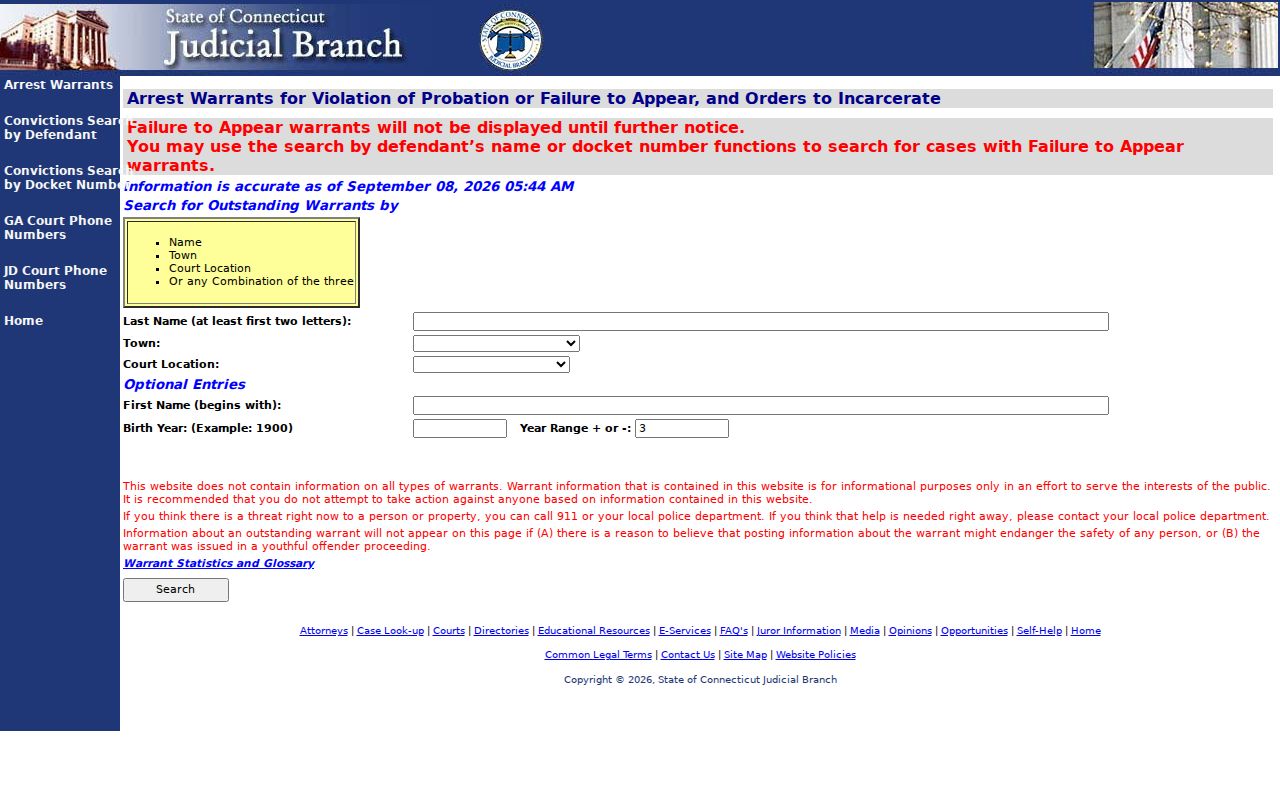
The official entry point is documented with its completeness warning. Even so, a blank screen cannot clear a warrant the public system never displays; only the issuing court can confirm one in Hartford County.
Myth: No match means no warrant.
Fact: The portal withholds FTA warrants and does not cover every warrant type, court event, or police record.
What a Warrant Search Asks For
The direct VOP search form takes a last name, an optional first name, a birth year or year range, a town, and a court location. Those filters help when a surname is common. There is no field for a warrant number. Choosing one court can also exclude records tied to a different Hartford County location, so be careful with that setting.
| Field | Control | Required | Use |
|---|---|---|---|
| Last name | Text | Yes | Primary name search |
| First name | Text | No | Narrows similar surnames |
| Birth year | Year/range | No | Separates common-name results |
| Town | Selection | No | Uses reported town information |
| Court location | Selection | No | Limits the issuing court area |
Start broad. Run the least restrictive accurate search first, then add the first name and birth year if the results are noisy. When the town or court location is unclear in a Hartford County check, run several searches rather than guessing one narrow setting.
Hartford County Name Matching
Details matter when you check your own Hartford County warrant record. A surname alone can pull up another person entirely. A spelling change, a hyphen, a suffix, or an old town can shift the result too. The form's birth-year range helps when a document gives an approximate age rather than a full date of birth. The official form lays out these fields plainly, so review the layout and choose values with care: see the Judicial Branch field layout.
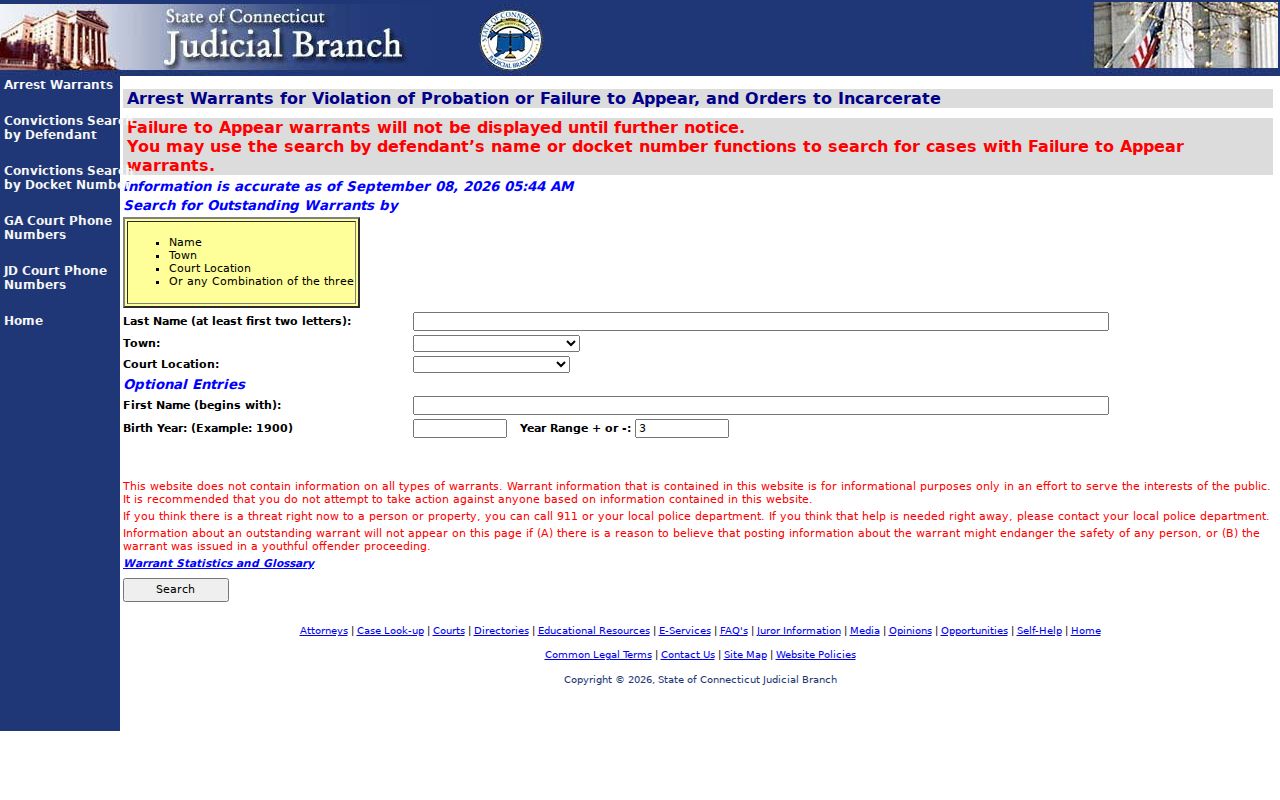
The field layout supports a careful identity match. Still, the result needs court confirmation before it settles anything. Save the exact spelling and filters you used, since the clerk will want to know what produced the match in your Hartford County search. Note: Search your own legal name as court records would show it, including a suffix when one appears in the case file.
Hartford County Warrant Search Results
A public match can display identity details, an address or town field, the court location, docket or warrant identifiers, offense information, an issue date, and bond information. Exact fields differ by record type. A VOP or arrest-warrant entry is not the same as a pending criminal docket in a Hartford County case. Neither should be read as a final case outcome.
| Name and birth data | Help distinguish the person listed from someone with a similar name. |
|---|---|
| Warrant or docket number | Use the displayed identifier, such as H14H-CR-0000000-S, when calling the clerk. |
| Charge or violation | States the alleged offense or probation basis, not a finding of guilt. |
| Issuing court | Points to the GA or Judicial District that can confirm status. |
| Issue and status data | Shows the recorded date or state of the process when published. |
| Bond information | May show a court-set amount or release term, subject to confirmation. |
Note the court, docket, date, and the exact status wording from any Hartford County result. Handing the clerk those details gives them a precise starting point and keeps two records from getting mixed.
Hartford County Docket Backup
When the warrant portal turns up nothing, the pending case search by defendant is the next public stop. It covers pending criminal and motor-vehicle matters across Hartford County courts. Have a notice or old case paper with the full number? The docket-number route works even better. Remember, this is a case search, not a warrant list. You can review the pending defendant form at its official source.
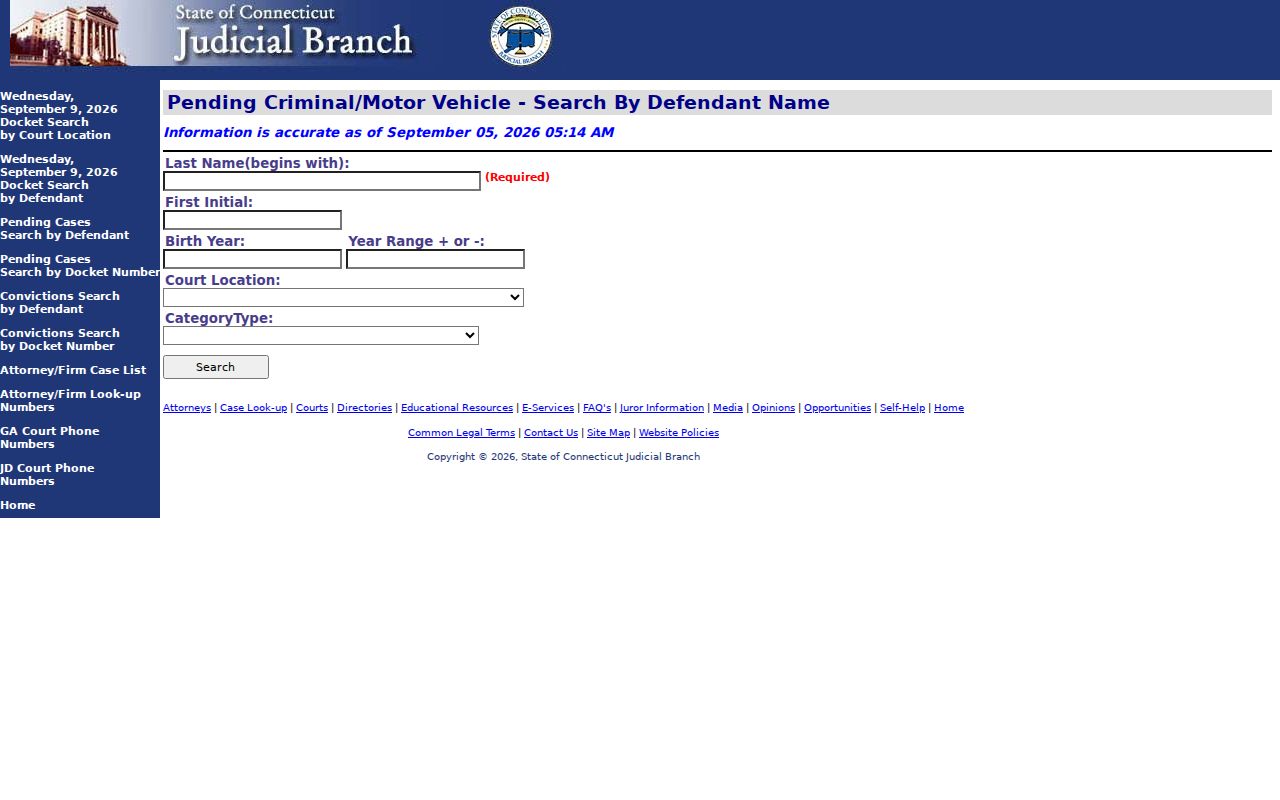
A pending docket can hand you the court and case number before you call a Hartford County clerk. What it usually will not show is warrant status. A missing warrant label does not mean the warrant is clear.
Hartford County Warrants: Who Holds What
Who to contact about a Hartford County warrant depends on the town and the level of the case. Hartford GA14 handles adult criminal, misdemeanor, infraction, and motor-vehicle matters for its area. Manchester GA12 takes the eastern Hartford-area towns. New Britain JD/GA15 and Bristol GA17 cover the central and Bristol side, while the Hartford Judicial District handles the more serious Part A criminal cases. Superior Court clerks keep the dockets behind all of it. For local service or incident records, try the Hartford, New Britain, Bristol, West Hartford, and Manchester police. Connecticut State Police handle matters that fall within their authority. At the courthouse, judicial marshals run security and courthouse functions. State marshals serve many civil capias matters. A capias or capias mittimus is civil or family-support process, distinct from an ordinary criminal arrest warrant in Hartford County and everywhere else in Connecticut.
Judicial Branch
Use court search tools and the clerk for docket and public warrant status.
Municipal Police
Ask the records unit about available local records and FOIA channels.
State Marshals
Civil capias service belongs to a different process from criminal warrant service.
Hartford County PRAWN Boundary
Connecticut's Paperless Arrest Warrant Network, known as PRAWN, handles warrant work electronically for authorized agencies. Hartford County residents cannot log in. The system is built for police, not the public. The state's own PRAWN description spells out who may use it and what the network does.
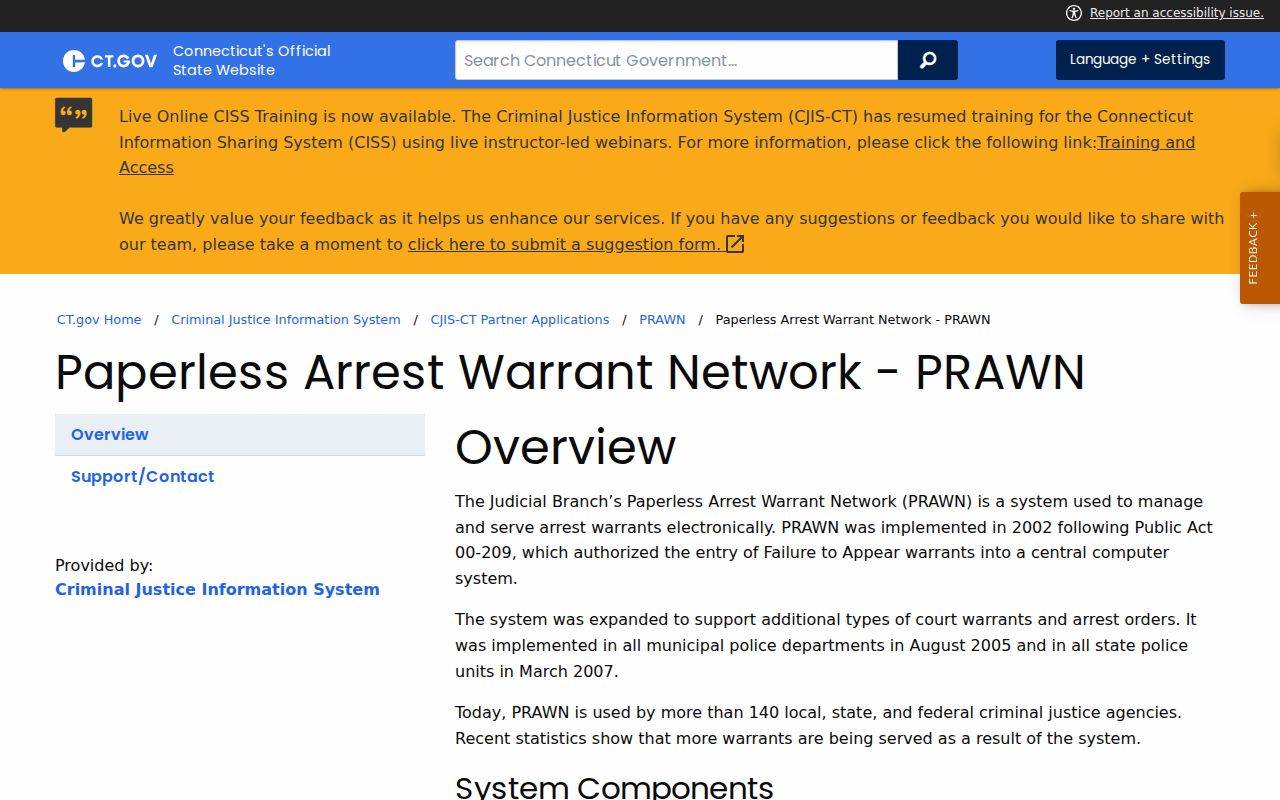
That gap is why no public Hartford County warrant check mirrors what law enforcement sees. Real confirmation still runs through published court tools, the clerk, and lawful records requests.
Hartford County FOIA Backup
Missing records online? Connecticut's FOIA request process is the backup when a Hartford County record is not posted. Send it to the agency holding the record. Hartford Police offers a records and redaction route. Court papers are different. Those requests belong with the Superior Court clerk rather than a town police unit. Describe the record, the date range, the court or agency, and any docket number. You can also ask simply to inspect. In Hartford County as elsewhere, the Connecticut Freedom of Information Act opens most agency records while still allowing exemptions and redaction. Judicial records follow court access rules, and some police material may be withheld where disclosure would break a lawful restriction.
Quick answer: FOIA is a records channel, not a way to force disclosure of a sealed warrant or a law-enforcement-only database.
Which Warrants Stay Restricted
Some files stay closed. Sealed cases, erased matters, juvenile cases, and youthful-offender information are all protected by law. The Judicial Branch search disclaimer adds that online data changes and is not the official record. A just-issued warrant may not appear in a Hartford County public tool either, and the current VOP/FTA notice expressly withholds FTA warrants. Restricted is not the same as absent. No public warrant search can settle it. The clerk confirms only what law allows. If a Hartford County warrant check concerns your own possible warrant, hand the information to an attorney. Police may decline operational details, so contact the issuing court through the official directory.
- Sealed
- Closed to public inspection by law or court order.
- Erased
- Removed from ordinary public access under Connecticut record rules.
- FTA
- Failure to appear, a court event that may lead to a rearrest or bench warrant.
- Recall
- A court action withdrawing an outstanding warrant.
Note: A public search result is never a reason to approach or detain anyone in Hartford County; send urgent safety tips straight to law enforcement.